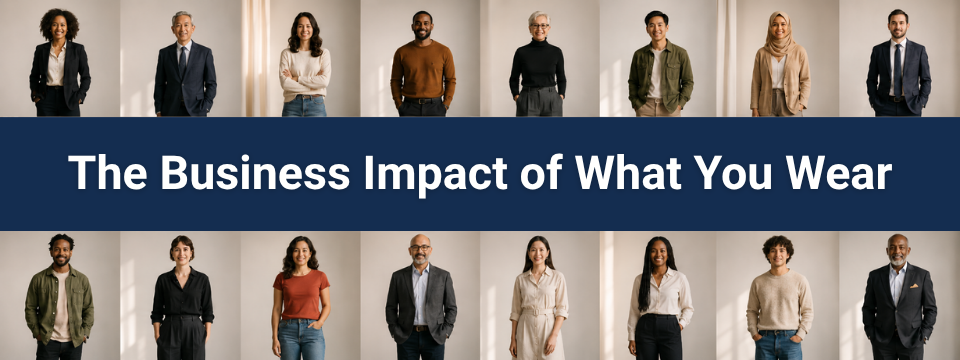
How many of us heard this question when we were younger? Those wiser than us knew something important: first impressions matter. Before you say a word, what you wear influences how others perceive you. In business, those perceptions affect relationships, opportunities and results.
The right shirt won't be the reason you close an opportunity or get a job offer. But your overall appearance contributes to the impression you make, shaping how you build rapport and respect, and ultimately, someone's trust and interest in working with you.
What you wear should reflect the situation and the people you're meeting with. If your appearance is noticeably out of step with the environment, it raises questions about your awareness and judgment before you've had a chance to say much at all.
Imagine a banker meeting with a law firm to win its business. If the attorneys arrive in suits and dresses while the banker shows up in a golf shirt and khakis, the issue isn't simply that one person dressed more casually. The difference suggests the banker didn't fully understand the audience or expectations of the meeting.
What's appropriate varies widely by company, industry, role and even region. It can also differ between teams within the same organization. Jeans might be perfectly appropriate for your day-to-day work in IT, for example, but if you're presenting to the executive team, adjusting your attire to fit the setting signals that you understand the significance of the conversation.
The same applies whether you're meeting in person or on video. A virtual meeting may call for a different level of formality, but your appearance and overall presentation still shape the impression you make.
Small details influence the impressions you make, even when your overall attire is appropriate.
Consider an executive walking into an important board meeting. Their clothing may be right for the setting, but a visibly frayed collar, an outfit that doesn't fit well or noticeably scuffed shoes becomes an unnecessary distraction.
Looking polished doesn't mean buying expensive clothes, accessories or jewelry. It means wearing clothing that fits well, is clean and is in good condition. Paying attention to these details signals care and preparation and reinforces the confidence others place in you.
In client-facing roles, your appearance reflects on more than just you. Clients, prospects and strategic partners naturally connect the person in front of them with the organization they represent.
The stakes rise when the organization itself is being evaluated. A CEO meeting with potential investors or a partner pursuing a major client carries the reputation of the organization into the room with them. Their presence becomes part of the overall impression of the company and shapes how others perceive its credibility and trustworthiness.
In some industries, expectations around appearance are even more pronounced. Where image is closely tied to the customer experience, such as fashion, beauty or luxury travel, employers and potential partners pay closer attention to whether someone's appearance aligns with the role, audience and brand.
Executives set the tone internally, too. What you wear helps establish expectations for your team and signals what's appropriate in different situations. Being thoughtful about those choices demonstrates awareness of the role you play in shaping how the organization is perceived.
What you wear is only one part of the impression you make, but it is an important part of your personal brand. Your appearance contributes to how people experience and remember you and can influence their interest in working with or referring you.
As your role and career evolve, consider whether your style reflects the level of responsibility, visibility and influence you have today or want to have next.
The goal isn’t to dress one particular way. It’s to make intentional choices, so your appearance supports, rather than distracts from the reputation you’ve worked hard to build.
And style is only one part of your personal brand. How you communicate in meetings, introduce yourself, present your ideas and represent yourself through your LinkedIn profile and bio all influence how others perceive you.
Point Road Group helps executives and teams build stronger, more intentional personal brands, so how they present themselves builds the credibility and trust that drive relationships and opportunities.
If you're not sure what your presence is signaling right now, that's worth a conversation.



